
Security guardrails for AI-generated code.
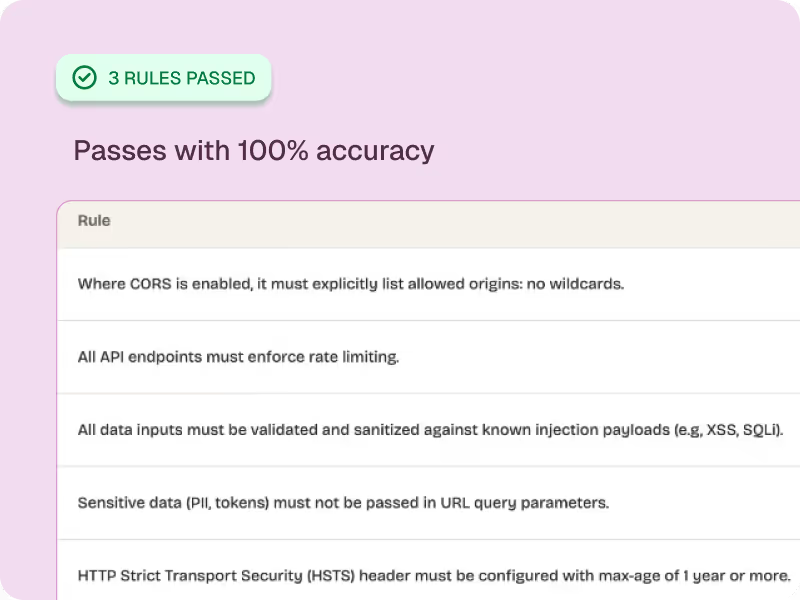
A continuous, accurate picture of your security posture - against the rules your team has defined, across every repo and every branch.

Most teams don’t know what’s hidden in their codebase.
.webp)
Security reviews focus on what's changing, not what's there.
PR reviews and CI/CD checks catch issues in new code. They say nothing about what's already sitting in your default branch - and with AI-generated code shipping faster than ever, that gap grows quickly.
Generic scanners don’t understand your code.
Traditional SAST tools match patterns. They can catch a hardcoded secret or an obvious SQL concatenation, but they can't reason about your system. They don't understand your architecture, your data flows, or the security decisions your team has already made.
Unnecessary noise has killed trust.
Decades of inaccurate findings have trained developers to ignore security alerts. When everything is flagged, nothing gets fixed. A scanner that cries wolf is worse than no scanner at all.
A baseline that reflects reality.
Baseline scans evaluate your entire codebase against your enabled rules - giving you a complete picture of what's currently in violation, not just what changed in the last PR.
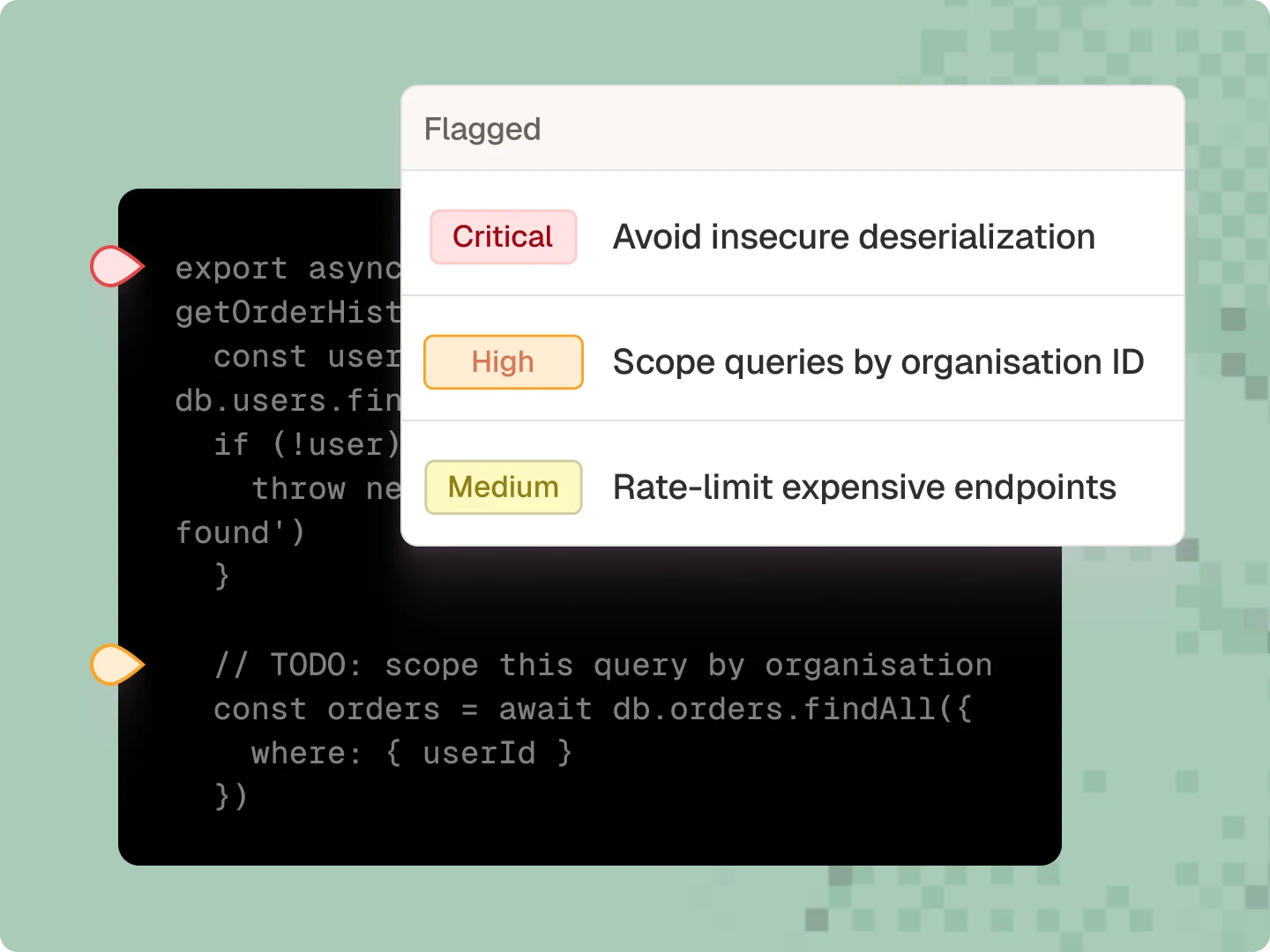
An audit trail built in.
Rules are versioned. Every scan produces a record of exactly what was checked, against which version of each rule, and what was found. Other tools drop a comment on a PR and move on. Dam Secure tracks every finding until it's resolved, so when compliance asks what your security posture looked like last quarter, you have a clear answer.
.webp)
Findings grounded in context.
Dam Secure is grounded in your security knowledge graph - built from your codebase, your architecture, and your existing patterns. It knows the difference between a real issue and a false alarm.
.webp)
How it works
Rules are matched to your codebase.
Dam Secure analyses your codebase and builds a security knowledge graph - a deep understanding of your projects, architecture, data flows, and existing security patterns.
Baseline scan populates your issue inbox.
A full scan runs against your default branch, surfacing everything currently in violation of your rules. Every finding includes the offending code, an explanation, and a severity rating.
PR scan catches issues as they’re introduced.
New code is checked against your ruleset the moment it's proposed, so issues don't make it into the default branch in the first place.
.webp)
Works with your favorite tools.


.svg)


.svg)
Explore features
A continuous, accurate picture of your security posture - against the rules your team has defined.

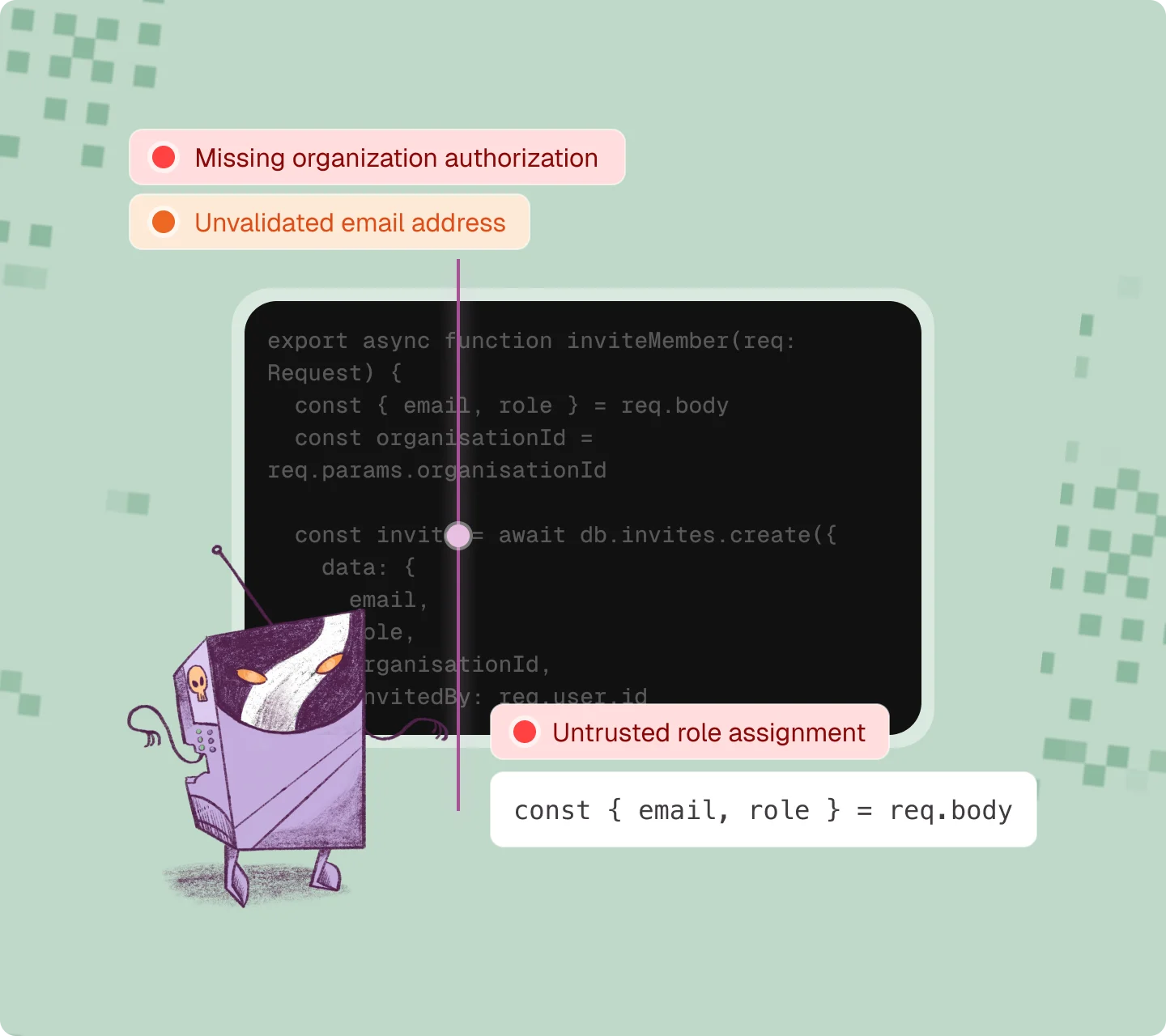
AI-native engine that reasons about your code, catching what rule-based scanners can't.
Dam Secure's persistent security memory - so findings are accurate from day one.
Secure Spec ensures your agent specs are secure by design - before any code is generated.
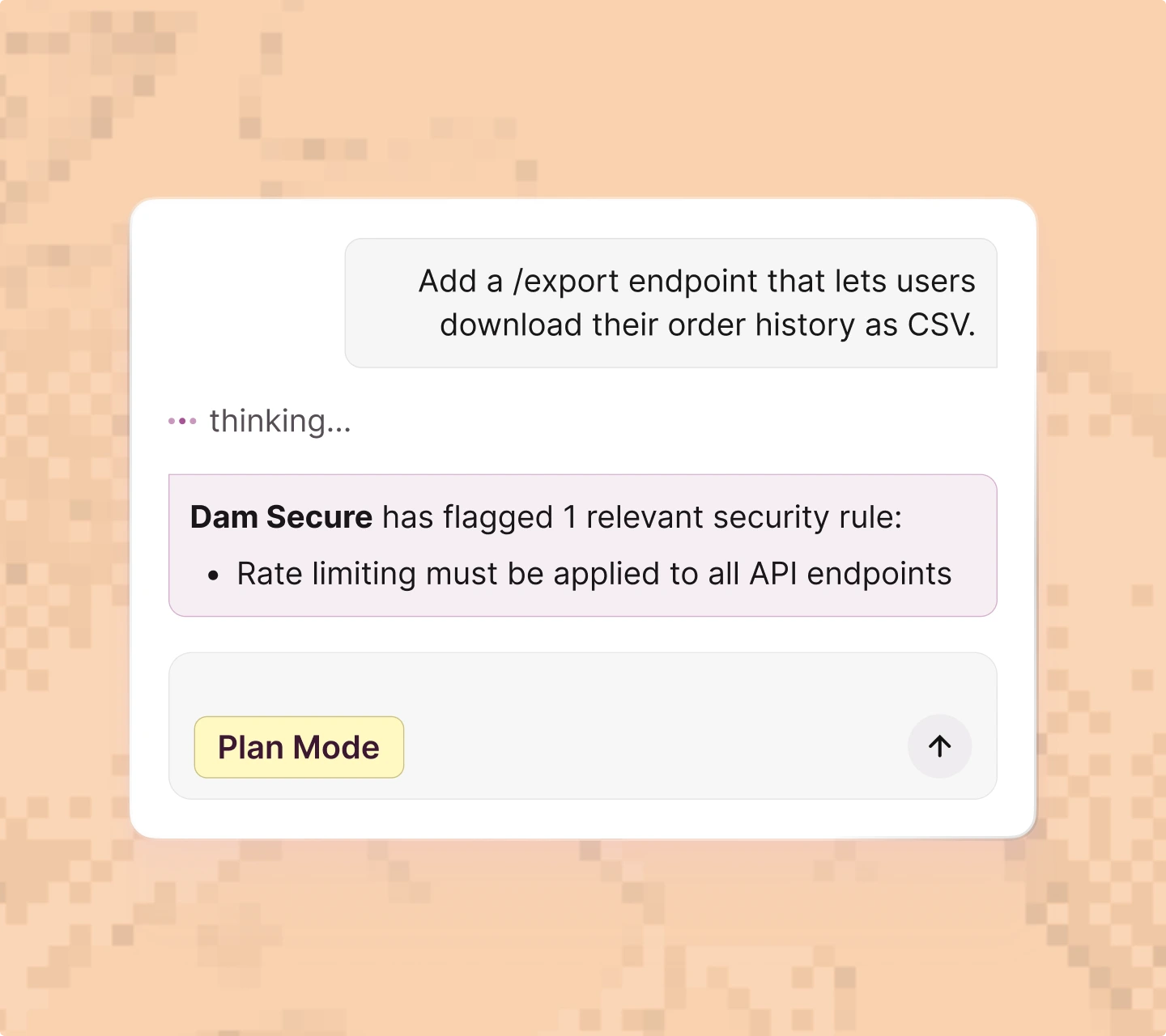
Triage and fix issues, author rules, and manage your security posture from inside your developer environment.
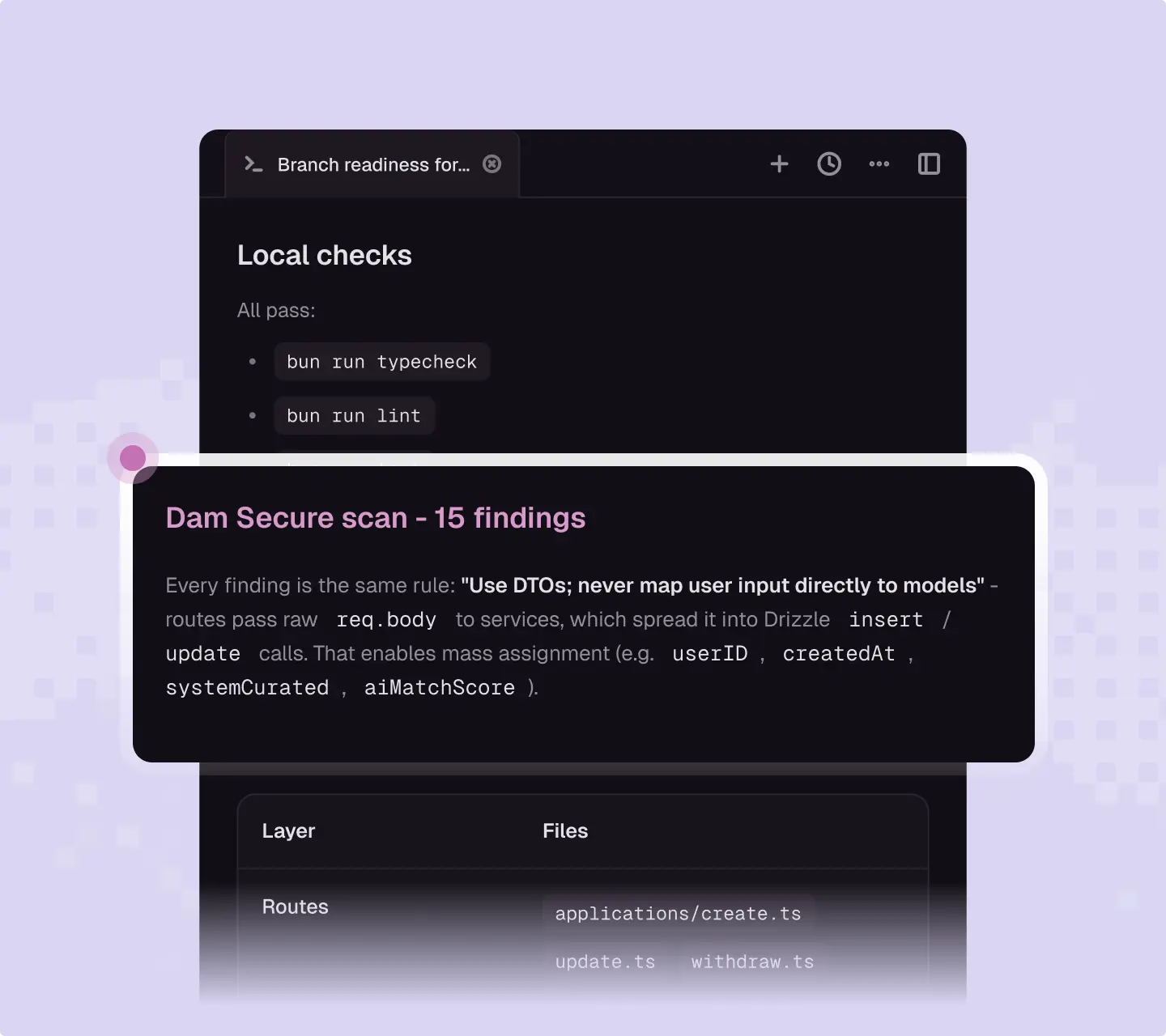
Scan every PR against your org’s security rules the moment it's opened - grounded in your codebase.

Your Security. Enforced at AI Speed.
Join other security-minded teams who refuse to let AI development outpace their security practices.
.webp)