
The foundation every security decision should be built on.
Dam Secure's persistent security memory - so findings are accurate from day one, not something your team spends months tuning by hand.
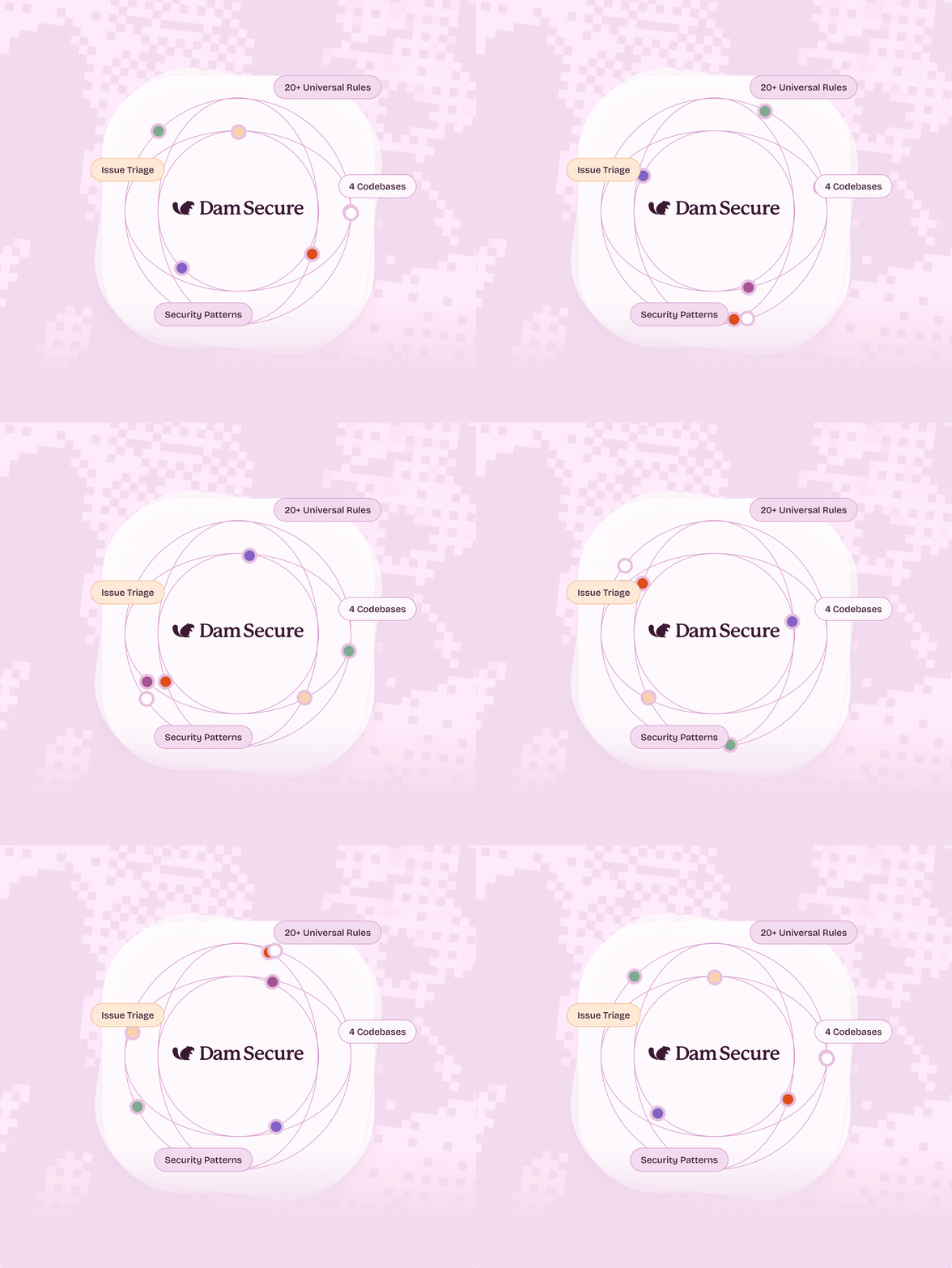
Traditional security
tools start from zero.
.webp)
Every scan starts from scratch.
Traditional tools re-derive context on every run. Every agent spin-up, every rescan, means rehydrating an understanding of your architecture, your patterns, and your risk areas before any real work begins.
Generic rules don’t know your codebase.
Pattern-matching tools apply the same rules everywhere. They can't tell you which libraries actually handle your auth, where your real attack surface sits, or what's already been reviewed and dismissed.
Nothing gets remembered.
Dismiss a false positive today, and most tools will flag the same thing again next scan. Without a persistent record, every finding starts the argument over from the beginning.
Curated facts,
not pattern matches.
Every project gets analysed through multiple security lenses: authentication, input validation, data handling, and more.
The result is a technology fingerprint and ruleset built for what's actually in your code,.

A memory
that persists.
The knowledge graph gets revalidated as your codebase changes, and refined every time a finding gets dismissed as a false positive - so the same noise doesn't come back next time.
.webp)
One source of truth,
every surface.
The same knowledge grounds Secure Spec, IDE checks, PR scans, and baseline scans. Build it once during onboarding, and every surface reuses it instantly. No rehydrating security context. No re-deriving architecture. No re-mapping attack surface on every agent spin-up.
.webp)
How it works
Structure analysis.
Every project and component in your repository gets mapped out, with irrelevant files excluded so scans stay focused on what matters.
Semantic indexing.
Git-aware security embeddings get built across your codebase for fast search, even at scale - the foundation for scanning entire repos, incoming PRs, local changes, and agentic plans alike.
Attack analysis.
Likely attack vectors get assessed for each project, based on what's actually there.
Metadata analysis.
A technology fingerprint gets built for every project: languages, frameworks, infrastructure, and the auth, crypto, validation, and secret management libraries that actually carry security risk.
Rule matching & development.
Relevant rules get mapped to each project, and custom rules get developed for what your codebase actually contains.
.webp)
Works with your favorite tools.


.svg)


.svg)
Explore features
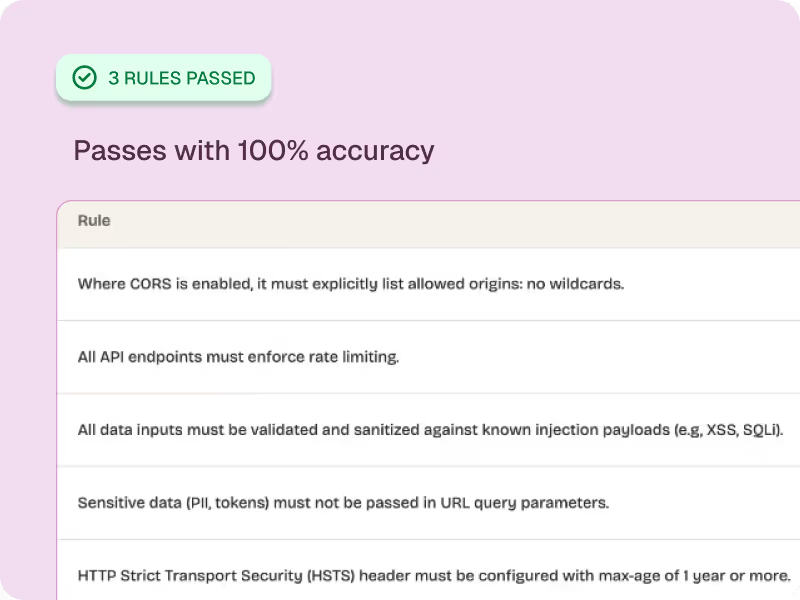
A continuous, accurate picture of your security posture - against the rules your team has defined.

AI-native engine that reasons about your code, catching what rule-based scanners can't.
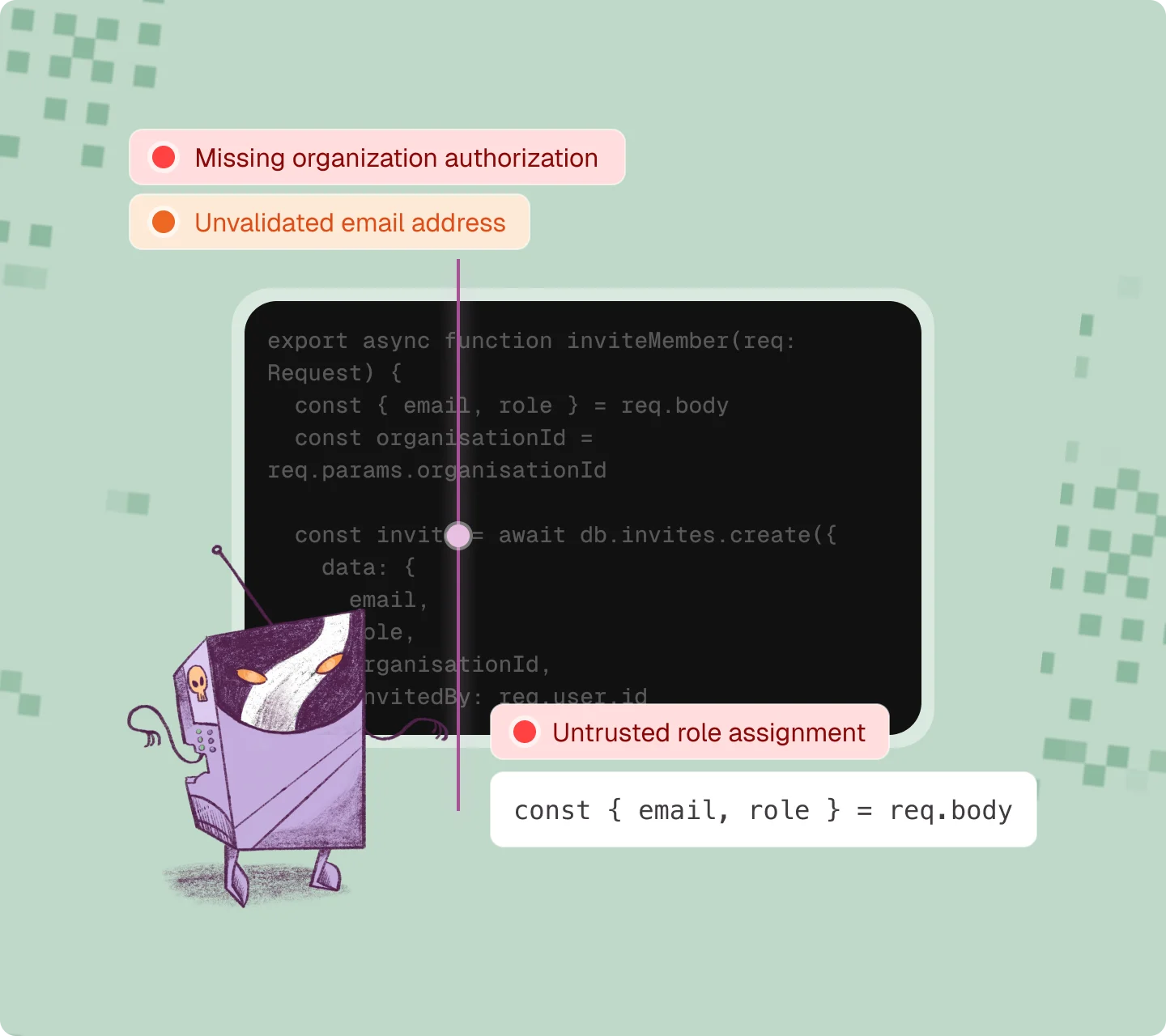
Dam Secure's persistent security memory - so findings are accurate from day one.
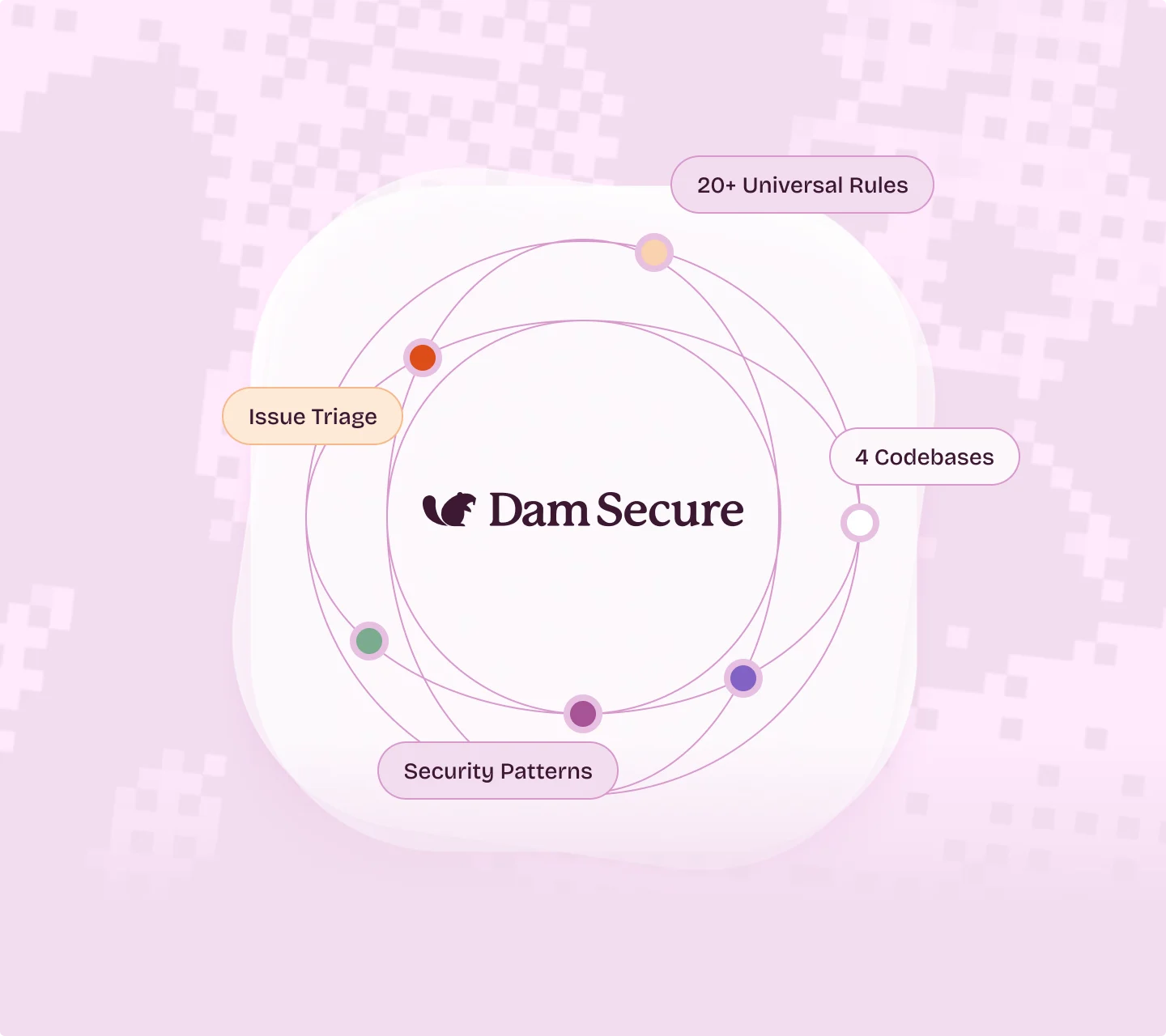
Secure Spec ensures your agent specs are secure by design - before any code is generated.
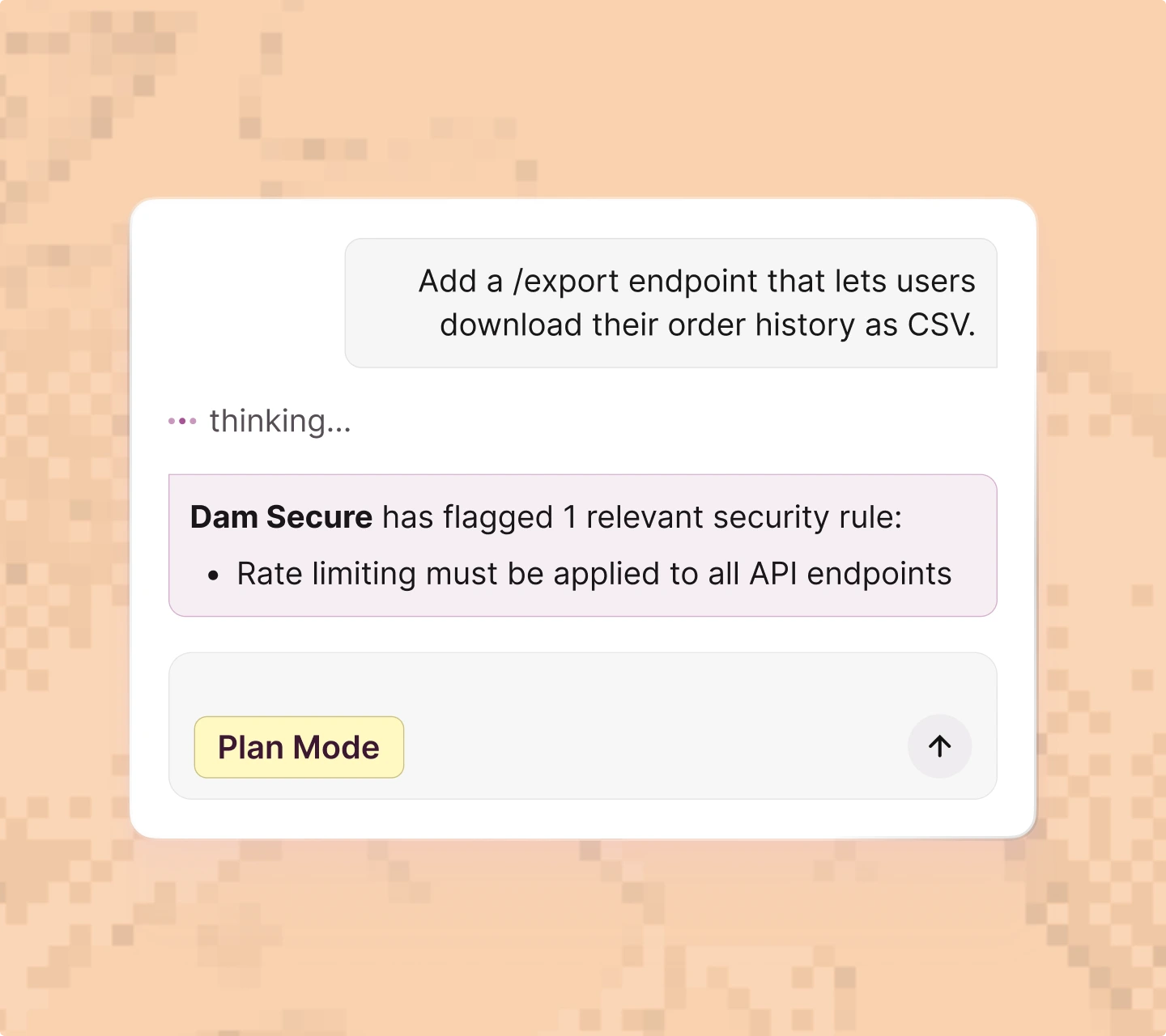
Triage and fix issues, author rules, and manage your security posture from inside your developer environment.
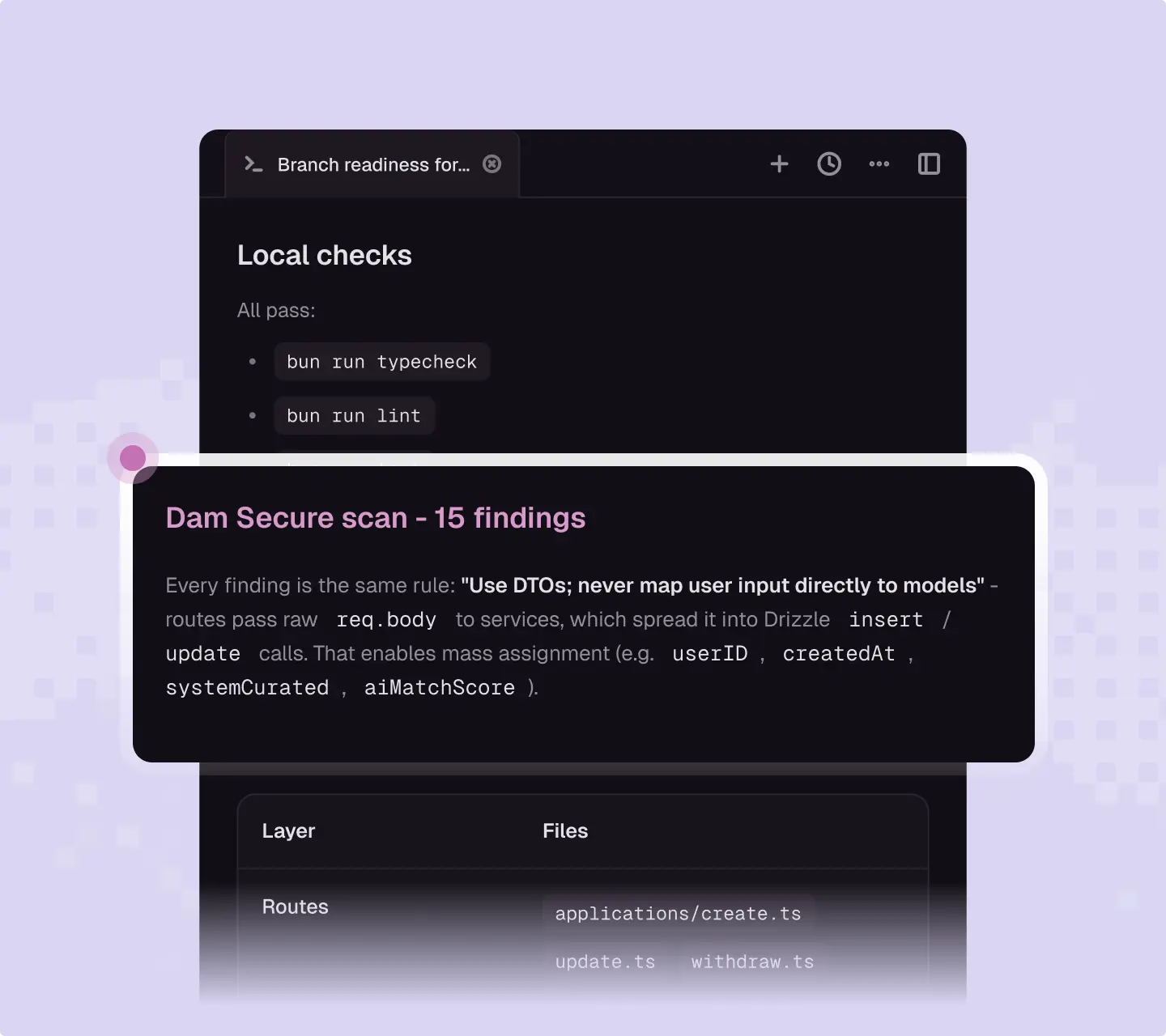
Scan every PR against your org’s security rules the moment it's opened - grounded in your codebase.

Your Security. Enforced at AI Speed.
Join other security-minded teams who refuse to let AI development outpace their security practices.
.webp)