Best alternatives to Claude Code Security in 2026
Summary
The best alternatives to Claude Code Security are Dam Secure for low-cost reviews on every PR, Codex Security for teams on ChatGPT Enterprise, Corgea and ZeroPath for AI SAST with autofix, and Semgrep or Snyk Code for rules-based coverage.
Most teams look for an alternative because of token costs or noise. If you mainly need occasional deep audits and you're already on Claude Enterprise, staying can make sense.
What is Claude Code Security now?
Anthropic launched Claude Code Security in February 2026 as a research preview. It reasons about a codebase the way a security researcher would, checks its own findings and suggests patches for a human to approve.
In April it was renamed Claude Security and moved to a public beta for Enterprise customers, with a plugin version for other Claude plans.
There's no separate platform fee. You pay for the tokens each scan uses, out of your Claude plan or API usage.
For pull requests, Anthropic's separate Claude Code Review product handles PR-time review, and Anthropic says those reviews average $15 to $25 each. Many teams use the names interchangeably, so this post covers alternatives to both.
Why do teams look for Claude Code Security alternatives?
The teams we speak to who are moving off it give the same few reasons.
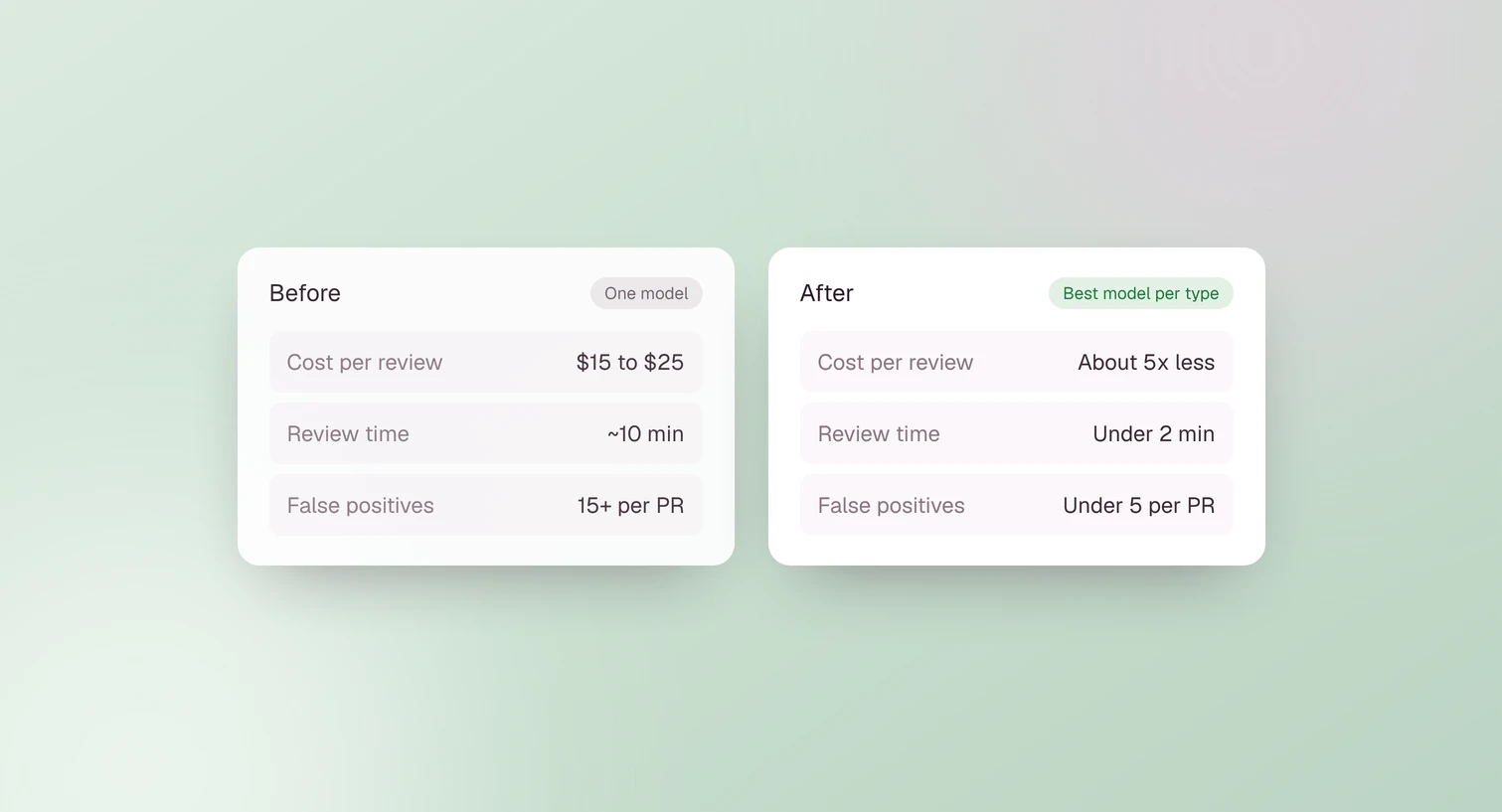
- Token costs. At $15 to $25 per review, a team opening 1,000 PRs a month is looking at $15,000 to $25,000 a month. Teams that switched to Dam Secure were often spending more than $10,000 a month on PR reviews.
- Noise. General-purpose reviews flag a lot of theoretical issues. Without context about how your codebase works, developers spend time dismissing findings that were never reachable.
- No memory. Dismiss a false positive today and it can come back on the next run, because nothing your team explained carries forward.
- One vendor's models. The best model for a given type of vulnerability changes with almost every release, and a tool tied to one model family can't switch when another pulls ahead.
None of this makes Claude Security a bad product. It's a strong general tool.
These are the trade-offs of using a general tool as your only PR security check.
Why does being tied to one vendor's models matter?
Claude Code Security runs every review on Anthropic's models. That means the same model family on every PR, whatever the language, the type of vulnerability, the cost or how fast you need a result.
No single model is best for every use case. We benchmark frontier models on real PR security reviews every time a new one ships, so we understand which model is best for each job.
In our latest benchmark, 16 models each reviewed 16 PRs with planted vulnerabilities, five times over.
- Three models found the same 64% of planted bugs at $0.42, $1.81 and $11.08 per PR. The $11.08 model was Claude Opus 5.
- No single model found every hard bug, and one SSRF bug wasn't found by any model in 80 tries.
A tool tied to one vendor can't act on that. You pay its price on every PR, at its speed, with its blind spots, even when another model would find the bug faster or for a fraction of the cost.
Dam Secure uses what the benchmark shows to route each review to the best model for that language and vulnerability type.
What are the best alternatives to Claude Code Security?
Here's a quick way to match the alternative to the reason you're looking.
1. Dam Secure
Best for teams that want a security review on every PR at a cost that doesn't scale with one vendor's tokens.
We benchmark frontier models on real security findings every time a new one ships, to learn which model is best at finding each type of vulnerability. Each review then goes to the best model for that language and vulnerability type.
Reviews take under two minutes with fewer than five false positives per PR, at about a fifth of the cost of Claude Code Security or a DIY setup. Dismissals and fixes carry forward, and findings sync to Linear and Slack.
2. Codex Security
Best for teams already on ChatGPT Enterprise or Business. Codex Security Review runs a security pass on each GitHub PR using the diff, repository context and your threat model.
It's still a research preview, and it runs on one vendor's models, so it carries the same cost and blind-spot questions as Claude Security.
3. Corgea
Best for teams that want AI SAST with a fix generated for every finding. Corgea focuses on business logic and auth flaws and includes PR scanning from $39 per developer per month, which makes costs predictable.
4. ZeroPath
Best for teams that want an AI-native SAST suite with fast PR scans and one-click autofix. ZeroPath's Team plan starts at $1,000 a month plus $60 per developer.
5. Semgrep
Best for security teams that want control over exactly what gets flagged. Semgrep's rules engine gives the same result on the same PR every time, and its AI auto-triage helps cut noise.
Code scanning starts at $30 per contributor per month. Someone has to write and maintain the rules.
6. Snyk Code
Best for teams that want SAST, dependency, container and IaC checks from one vendor. Snyk Code is strongest on known vulnerability patterns and less suited to logic flaws specific to your codebase.
Plans start at $25 a month for small teams.
7. Build it yourself
Some teams wire up the /security-review command or their own agent in CI. It's a good way to learn what AI review can do.
It gets expensive and hard to keep consistent as it grows. We cover where it breaks in the ceiling for DIY security reviews.
When should you stay on Claude Code Security?
Stay if most of these are true:
- You're on Claude Enterprise and the token spend is already budgeted.
- You mainly want deep, occasional audits of existing code, rather than a check on every PR.
- Your PR volume is low enough that $15 to $25 a review doesn't add up to much.
- Your team has time to triage findings by hand.
You can also run both. Some teams keep Claude Security for periodic deep audits and use a dedicated tool for every PR.
How do you switch without losing coverage?
- Run both on the same PRs. Pick two to four weeks of real PRs and compare findings, misses and false positives side by side.
- Measure the real cost. Pull your actual token spend per PR from Claude's usage analytics, including agent-opened PRs.
- Bring your context with you. Export known false positives and accepted risks so the new tool doesn't relearn them from scratch.
- Switch when the data says so. Move PR review over first, then decide whether you still want periodic deep audits.
How Dam Secure fits
Dovetail did exactly this. Its engineering team used Claude Code Security as its main PR security check and found it useful but noisy and expensive.
They ran Dam Secure on the same PRs, saw it catch issues Claude Code Security missed, and switched. Findings now sync to Linear and close when they're fixed.
You can read the full Dovetail story or our head-to-head comparison with Claude Code Security.
The best model for each type of vulnerability, and what it costs, changes with every model release.
Dam Secure keeps benchmarking and routes each review to the best model at that point in time, which a single-vendor tool or a DIY setup can't easily do.
Want to compare on your own PRs? Speak to our team.
FAQ
Is Claude Code Security the same as Claude Security?
Yes. Anthropic launched it as Claude Code Security in February 2026 and renamed it Claude Security in April, when it moved into public beta for Enterprise customers.
How much does Claude Code Security cost?
There's no separate platform fee. Scans use tokens from your Claude plan or API account.
Anthropic's separate Claude Code Review product, which reviews PRs, averages $15 to $25 per review.
Can I run Dam Secure alongside Claude Code Security?
Yes. Dovetail ran both on the same PRs before switching, and some teams keep Claude Security for periodic deep audits while Dam Secure reviews every PR.
Does Dam Secure use frontier models?
Yes. Dam Secure benchmarks frontier models on real security findings and routes each review to the model that performs best for that language and vulnerability type, so you don't pay one expensive model's token bill on every PR.